How Campus POV turned a paper-heavy, manually graded exam process into a quality-driven digital programme, and made it stick.
About Campus POV
Where West Flanders trains its police and emergency services
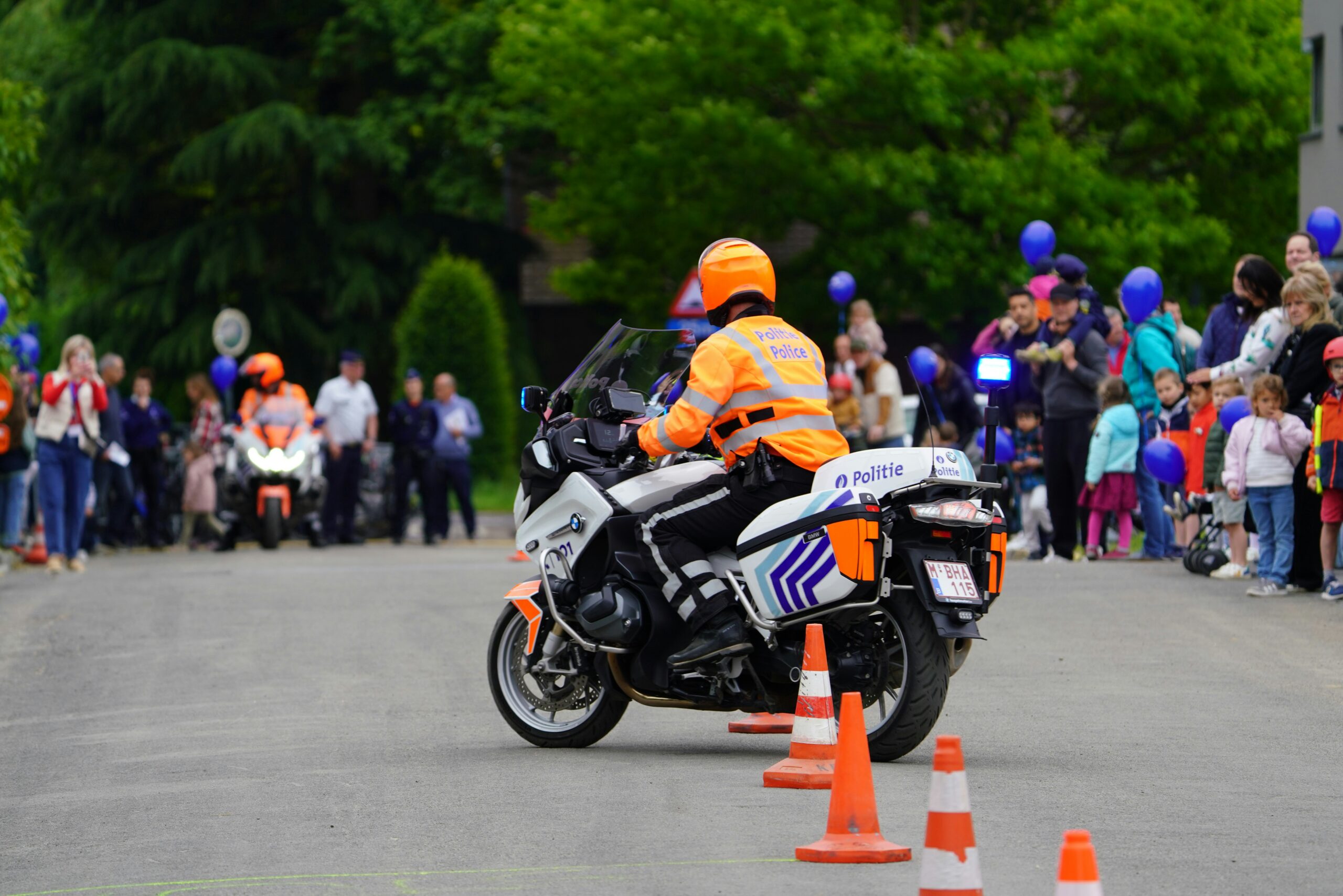
Campus POV is the provincial training and examination centre for security and emergency services in West Flanders, Belgium. It trains, examines, and certifies police officers, firefighters, and urgent medical assistance personnel, delivering the official exams, certificates, and diplomas that qualify people to serve. Campus POV uses assessmentQ for its police education programme, where training runs daily and exams take place roughly every three months across dozens of specialist subjects. The results are official: they determine whether candidates can progress within a regulated public service. Every exam carries real consequences, for the candidates and for the school itself.
Benoît Finet
“A 25-minute training is all it takes for an external teacher to grade. And with that working, the tool works.”
Benoît Finet, Head of the Pedagogical Unit, Campus POV
Benoît Finet leads pedagogy and educational quality at Campus POV in the department of police education. His role covers everything from student coaching and educational strategy to teacher development and exam integrity. When he joined, he inherited a process built on paper and manual numbering, with one colleague responsible for all exam logistics: numbering scripts, mailing papers, delivering to graders’ homes, and consolidating scores by hand.
Challenge
A paper mountain held up by one person
Before assessmentQ, running an exam meant collecting questions by email from external teachers, assembling paper booklets by hand, and numbering every page of every script. Belgian law requires anonymised grading in police education: examiners must not know whose paper they are marking. On paper, that meant stripping names and numbering thousands of pages manually. With 60 students and a 20-page exam, the numbering alone filled a working day.
“That was a day job, only numbering the exams.”
Then came the scanning, the posting, and the reassembly. A single administrative colleague managed the entire cycle, from collecting questions to delivering scripts to graders’ homes and reconciling the results.
The quality of the questions was just as hard to control. Exam content comes from up to 250 external teachers, each writing questions in their own style, with no shared standard. Benoît describes the root of it simply:
“They are not trained to be a teacher, they are trained to be a police officer.”
How assessmentQ helped
The administration disappeared. The quality became visible.
Benoît already knew the platform from his years in higher education, and after comparing options the decision came together quickly. What convinced the administration team was immediate and concrete: no more numbering, no more scanning, no more packages in the post.
For Benoît, the value went deeper. Every question now lives in a structured item bank, tagged with metadata, written to a shared standard, and checked against a model answer before an exam goes live. Grading happens digitally, question by question, so a grader assesses answers rather than adding up points by hand.
That question-level view changed what he could see. Grades that had quietly been rounded up on paper now show as patterns in the data, and subjects that always scored well started telling a more honest story.
External teachers are onboarded to the grading module in 25 minutes, and grading, the one part of the platform every teacher touches, is where adoption started. Item creation sits centrally with Benoît’s team, so every question passes through one quality standard before it reaches an exam.
Impact
The paper cycle is gone.
Numbering, scanning, posting, and manual reassembly have been replaced by a single digital workflow. The colleague who once managed it all still handles the administration, with far less of it to do.
Grading is digital and fast to learn
A 25-minute training is enough for an external grader to work in the platform, marking question by question with the model answer alongside.
Question quality is measurable.
Every item carries metadata, a consistent structure, and a checked model answer before it reaches an exam.
Grading oversight exists for the first time.
Question-level results make grading patterns visible, something that was impossible when scripts moved through the post.
The item bank is built for reuse.
Each exam is authored in multiple versions, so future cohorts draw from a growing, quality-checked question pool instead of starting from scratch.
Paper is behind them for good. The exams are digital, the question bank keeps growing, and the strongest argument is in the quality itself.
“Since we went digital, the questions are better, the answers are better, and the grades show it.”
– Benoît Finet, Head of the Pedagogical Unit, Campus POV
Curious for more?
Feel free to book a short call with one of our experts.